Required
Things you need to get before your dog goes back home:
*Most* training tools will be included in your board and train and will be sent home with you pup - here are links to things that are your responsibility to get.

A Note on E-Collars:
E-collars are extremely safe tools, but it’s important to treat them with respect. Like anything that rests in the same spot on the skin, they can cause pressure sores if left in one position too long, and moisture trapped under the collar or contact points can lead to irritation.
To prevent this, rotate the receiver to the opposite side of your dog’s neck every couple of hours. Unless otherwise needed or discussed for your individual dog, I also recommend removing the collar during crate time, overnight sleep, and transport in a vehicle. After swimming or walking in the rain (thanks, PNW fall), take the collar off when possible to let the skin fully dry.
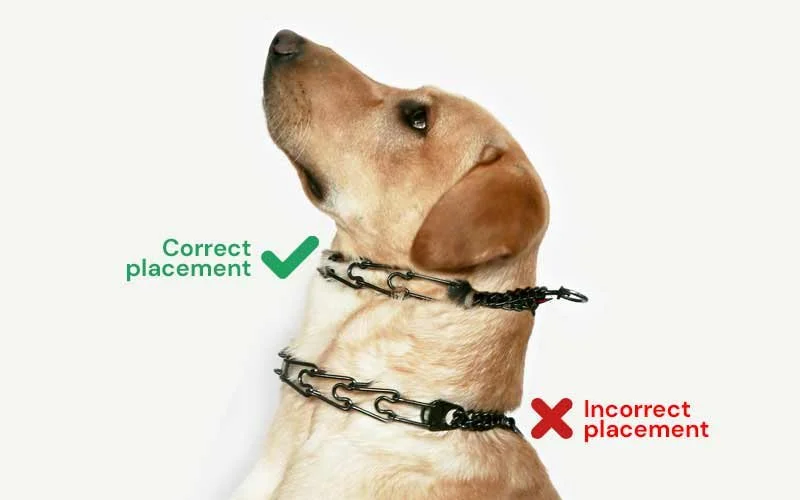
A Note on Prong Collars:
Prong collars should only be left on the dog when there is a leash attached to them! They should not be left on when the dog is unsupervised, when the dog is in a crate, or ever left on while the dog is playing with other dogs.
The ecollar is used to give direction and correction when a leash is not present or is not the most valuable language in a particular situation. The ecollar is valuable in many circumstances, but cannot give clear directional information (move left, move right, go back, etc) like a leash can. It can only provide pressure on/pressure off stimulation which requires many many repetitions in training which is why we only offer ecollar training in the 3 Week Program. We teach ecollar only after the dog has learned leash pressure, body pressure, and verbal cues.
The ecollar is similar to a TENS unit used in physical therapy on humans. It is a muscle stimulator that does not shock the dog, but provides a 'blunt' tingling type feeling.
Level Fluctuations: While it would be fantastic if we could use a single level for all things, this simply doesn't work for most dogs. Our levels need to match the adrenaline levels in the dog, so our levels will consistently increase or decrease according the amount of excitement and/or stress or dog is under. At our go home session we will give you recommended directional and correctional levels for your particular dog.
Ways to Use Ecollar
Directional: The ecollar can offer direction through low levels (pressing and holding or continuous tapping until the dog completed the action). This stimulation is similar to leash pressure. We use this for direction for recall, down, sit, and the out command. By the time your dog returns home to you you will only need to use the ecollar when the dog is non-compliant for your verbal commands.
Your dog's directional levels are: ______________________
Correction: The ecollar can also offer correction. This is done through higher momentary levels (tapping button once or twice). This sensation is similar to a leash pop.
A standard correction would require us to redirect the dog to an alternative behavior.
For example: Jumping (correction marker followed with a correction, when dog is on floor offer the good marker). Barking at fence (correction marker followed with a correction, recall back to you, mark good). Pulling on leash (correction marker followed with ecollar and/or leash correction, once dog is back into heel position offer the good marker).
Act of God Correction: A correction that requires no additional information, marker words or alternative behaviors are not needed. This would include but is not limited to: Counter surfing. Poop eating. Digging.
Your dog's correction levels are: __________